
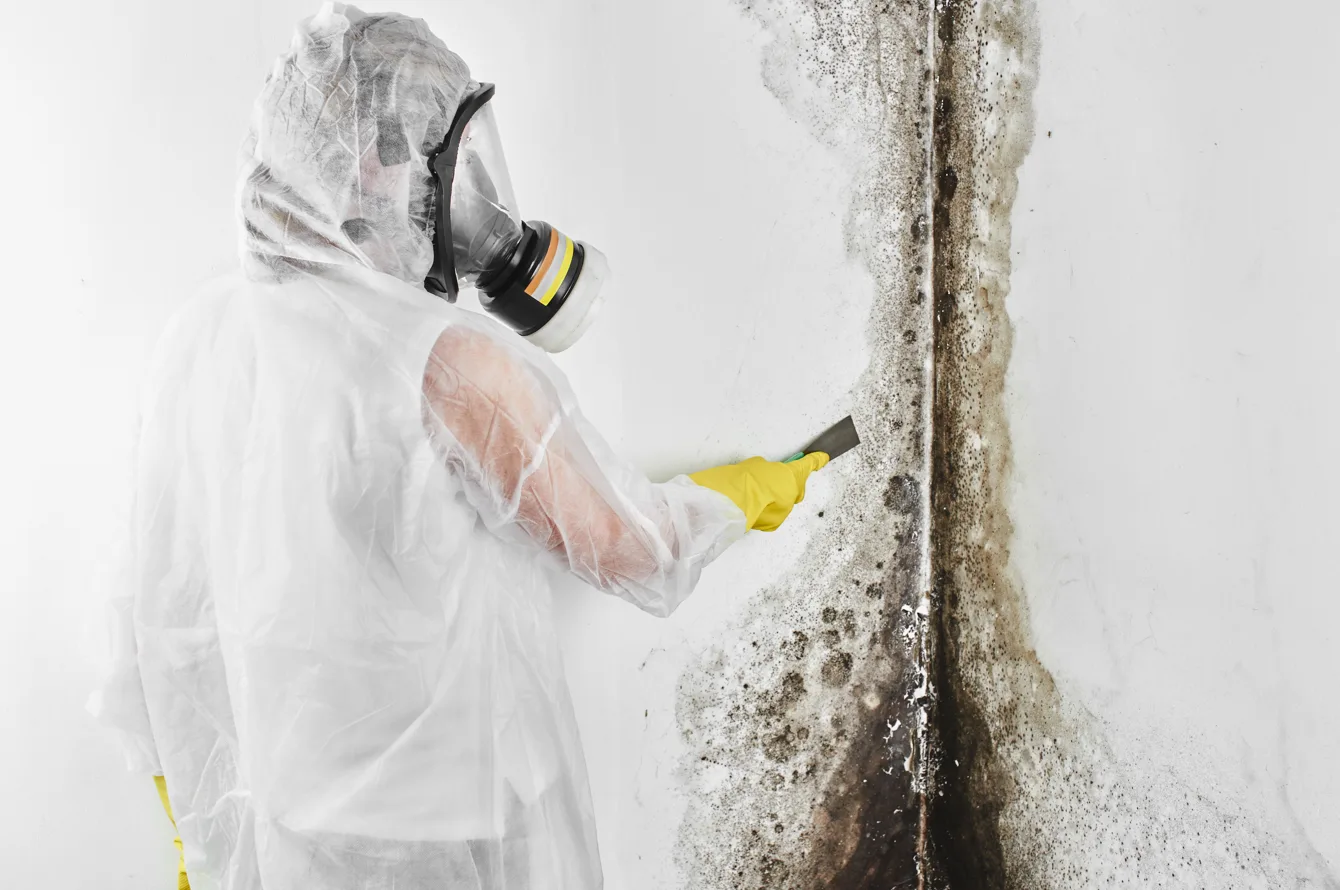
If you’re reading this, you probably already know you have a mold problem. The good news is that mold rarely ever shows up one fine day. It’s an accumulation of days, weeks and even months. That is, if you’ve been paying attention to your surroundings.
We’ve been doing mold remediation for years, and we’ve seen it all. Here’s what happens when professionals tackle mold.
Step 1: The Inspection
First things first, we need to know what we’re dealing with.
When we show up for an inspection, we’re not just looking at the visible mold spots. We’re running a full investigation. This is because what you can see is usually just a fraction of what’s actually there. It’s like an iceberg.
Here’s what we’re actually looking for:
- Active leaks
- Previous water damage that may haven’t been addressed properly
- Musty smells
Once we’ve found what we’re looking for, we’ll take air samples from both affected and unaffected areas. This tells us what type of mold we’re dealing with, fun fact there are over 100,000 different species, how concentrate the spore count is and how far it’s spread based on the visual growth.
After wrapping up the inspection, it’s time for the report. This helps you understand the reality and the gravity of the situation. In this report we’ll answer everything you’ve been itching to find out, such as how extensive the problem is, what’s contaminated, what caused it and how long the remediation process will take.
Sometimes the findings of these inspections are bad. But knowing the full scope is better than discovering halfway through remediation that it’s worse than you thought.
Step 2: Fixing the Moisture Problem
If you don’t fix the moisture source, the mold will just come back.
We could remove every visible spore and sanitize every surface, but if water is still leaking, mold will return. We’ve seen it happen.
We join forces with plumbers, roofers and HVAC contractors to get to the root of the problem. This includes addressing leaking pikes, roof leaks, poor ventilation and clogged gutters.
Step 3: Containment
Mold spores are microscopic, airbone and disturbingly great at spreading to places you wouldn’t have even guessed. During the remediation process, tearing out contaminated materials disturbs thousands of micrsoscopic spores. Without proper containment, they spread throughout your house, and you’ve just made your problem exponentially larger.
We achieve this by 3 ways:
- Phyiscal barriers such as plastic sheeting covers and taping vents
- Negative air pressures help pull air into the sealed area and is filtered before being exhausted outside.
- For larger areas or widespread mold, decontamination chambers can help seperate sealed areas from the rest of your assumingly unaffected home.
Step 4: Air Filtration
While we work, industrial HEPA air scrubbers run continuously. These are commercial units that cycle the room’s air multiple times per hour. They capture mold spores, dust particles and other airborne contaminants.
The units run during the entire remediation process and usually for 24-48 hours after we finish the physical work.
Also Read: Mold Removal vs. Mold Remediation: What’s the Difference?
Step 5: Removing Contaminated Materials
Unfortunately, when it comes to affecting contaminated materials, there are some things that simply can’t be salvaged, no matter how much we’d try. These include:
- Drywall
- Ceiling tiles
- Carpet and padding
- Insulation
- Paper and cardboard
- Fabrics
We bag these materials in heavy contractor bags while they’re still in the containment area. The bags get sealed, and we remove them for proper disposal.
Step 6: Cleaning
Once contaminated materials are removed, we clean every remaining surface in the affected area. We do this with the help of HEPA vacuums, EPA-registered antimicrobial and antifungal solutions and encapsulation when needed. The latter is useful when we want to prevent future mold growth on that specific surface.
Step 7: Post-Remediation Verification
When it comes to mold remediation, you can’t simply assume it’s gone and wish for the best. The concluding step in every mold remediation service is a thorough inspection. This involves running air quality tests that check whether spore counts are equal to or lower than outdoor basline levels.
If spore counts are still high, we need to get to the bottom of it, which means doing a re-test if need be.
Step 8: Restoration
Remediation removes the problem. Restoration puts your home back together.
Depending on what we removed, this might involve installing a new drywall or painting the walls. We work with contractors, or we handle it ourselves, depending on the scope. The goal is to return your home to pre-contamination condition, or better.
Say Goodbye to Mold Spores Forever
We have to admit that mold remediation is not glamorous work. It’s often unpleasant, sometimes expensive, and always necessary when mold gets beyond minor surface growth.
At Flood Restoration Pros, we offer mold remediation services that tackle everything from small bathroom mold issues to extensive basement contamination. We bring the equipment, expertise, and thoroughness needed to do the job right the first time.
If you’re dealing with mold, we can help. Call us for an inspection and a quote, we’ll give you honest answers about what you’re facing and what it’ll take to fix it.
